
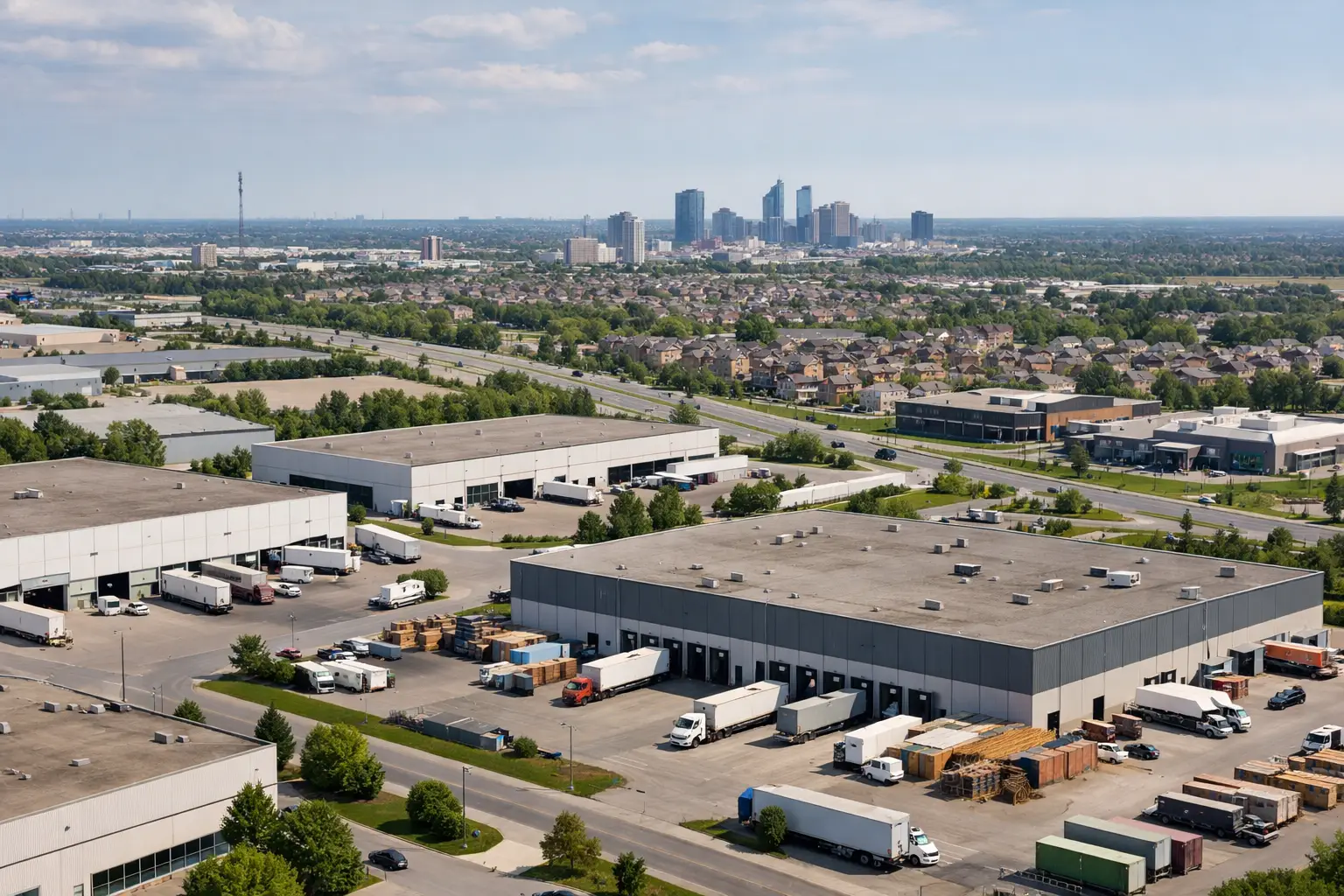
Best Brampton Industrial Areas for Your Business
A loading door, ceiling height, and a highway connection can affect a business far more than a polished office finish. When comparing the best Brampton industrial areas, the right choice depends on how goods move, where employees live, the building specifications you need, and whether the location will still work as your operation grows.
Brampton is one of the GTA’s most active industrial markets, with a major concentration of logistics, warehousing, manufacturing, food distribution, automotive uses, and contractor-oriented businesses. That scale creates opportunity, but it also means availability can be competitive and properties within the same broad area can perform very differently. A clear site strategy should come before a lease offer or purchase decision.
What Makes an Industrial Area a Strong Fit?
Industrial real estate is not one-size-fits-all. A last-mile distribution company may prioritize fast access to Highway 410 and the 407. A manufacturer may place more value on power capacity, trailer parking, outside storage permissions, and a workforce within a manageable commute. A small business owner may need a flexible unit that combines warehouse space with customer-facing office or showroom area.
Start with the non-negotiables: required square footage, shipping volume, clear height, dock and drive-in doors, power, parking, zoning, and truck circulation. Then assess the location. A lower asking rate can lose its appeal if drivers face inefficient routes, employee recruitment is difficult, or the site limits future expansion.
It is also wise to separate what is essential on day one from what is helpful later. For example, excess trailer parking may feel optional until peak-season inventory arrives. The same is true of expansion land, additional bays, and lease renewal rights.
Best Brampton Industrial Areas by Business Need
Airport Road and Steeles Avenue East
The Airport Road and Steeles Avenue East corridor remains a practical choice for businesses tied to freight, air cargo, regional distribution, and airport-adjacent activity. Its southern Brampton position offers efficient routes toward Mississauga and Pearson Airport, while access to major GTA highways supports broader delivery networks.
This area is particularly relevant for users that need to serve Peel Region, Toronto, and the western GTA without locating directly at the airport. Building inventory can range from established multi-tenant units to larger warehouse and distribution facilities, although exact availability changes quickly.
The trade-off is demand. Well-configured space near major transportation routes often attracts multiple interested tenants or buyers. Businesses should be ready with financial information, a defined possession timeline, and a realistic understanding of operating costs before entering negotiations.
Bramalea Road, Steeles Avenue, and Queen Street East
Bramalea is one of Brampton’s established employment districts, with a deep mix of industrial buildings, supporting services, and labor access. The area can suit manufacturers, wholesalers, contractors, automotive-related operations, and businesses that need a central eastern Brampton location.
Its value often comes from flexibility. Depending on the specific pocket, users may find smaller bay configurations, older functional industrial buildings, and properties with a more practical office-to-warehouse balance than newer logistics facilities. Proximity to Highway 410 and connections toward the 407 can be meaningful for companies moving shipments in multiple directions.
Older buildings require closer due diligence. Confirm clear height, sprinkler capacity, electrical service, loading layout, environmental history, and whether the property can accommodate your truck size. A building that is operationally sound may be a better business decision than a newer option with features you will not use.
Goreway Drive and Northeast Brampton
Northeast Brampton, including areas around Goreway Drive and nearby industrial roads, is worth considering for logistics, warehousing, light manufacturing, and service businesses that benefit from eastern GTA connections. This broader area provides access to Airport Road, Highway 410, and routes toward Vaughan and York Region through the 407.
For some users, this location creates a useful middle ground: close enough to airport-related activity and key transportation infrastructure without relying solely on a Mississauga address. It can also appeal to businesses whose customers, suppliers, or staff are distributed across Brampton, Caledon, Vaughan, and Toronto.
Site functionality matters especially here. Ask how trailers enter and exit, whether parking is shared, where loading occurs, and if neighboring uses create congestion at key times. A map may suggest excellent access, but an in-person site visit often reveals whether daily operations will be straightforward.
Mississauga Road, Heritage Road, and West Brampton
West Brampton and the Mississauga Road-Heritage Road employment areas are often considered by larger industrial users, distribution businesses, and companies seeking modern facilities with room for meaningful operations. These locations can provide strong connections to Highway 407 and western GTA markets, as well as convenient access toward Milton, Oakville, and Halton Region.
Newer industrial product in and around this part of the city may offer higher clear heights, modern loading configurations, larger truck courts, and contemporary energy systems. Those features can improve operational efficiency, particularly for high-volume logistics and warehousing users.
However, modern design usually comes at a premium. The decision should not be based on rent or purchase price alone. Consider total occupancy cost, including taxes, maintenance charges, utility demands, fit-out work, equipment installation, and potential downtime before occupancy. A highly efficient building can justify a higher cost, but only if its features solve a real operating need.
South Brampton Near Mavis Road and Highway 407
South and southwest Brampton can be a strong fit for businesses that move frequently between Brampton and Mississauga or need practical access to Highway 407, Highway 401, and the broader western GTA. This location can work well for regional distribution, contractor businesses, and firms serving customers across Peel and Halton.
The area offers a mix of industrial formats, from smaller units suitable for growing owner-operated companies to larger facilities. For investors, it can also be an area to examine for tenant demand, provided the property’s configuration, loading, and lease terms align with the local user base.
Do not assume every building near a highway interchange offers the same operational advantage. The route from the property to the highway, local turning restrictions, peak traffic conditions, and truck access can change the practical value of a location.
Leasing, Buying, or Investing: The Questions Change
A tenant should focus on flexibility, lease structure, renewal options, permitted use, and the cost of adapting the space. If the business may outgrow the unit within a few years, a lower-cost property with no expansion path can create another disruptive move sooner than expected.
An owner-user buyer should look beyond present needs. The right industrial property may support operational control, long-term business planning, and potential value growth, but it also concentrates capital in a specialized asset. Building condition, zoning, financing requirements, environmental review, and future marketability deserve careful attention.
For investors, industrial demand is only part of the picture. Tenant quality, lease covenants, remaining term, rent structure, building functionality, and future replacement costs can shape the property’s performance. A property in a popular industrial area is not automatically a strong investment if the lease or physical layout limits its appeal to future tenants.
Due Diligence Before You Commit
Before making a decision, verify the property’s permitted use with the municipality and review any restrictions that could affect your operation. Outdoor storage, vehicle-related uses, food production, heavy manufacturing, signage, and parking requirements can be treated differently under local rules. Never rely solely on a listing description when your business depends on a particular use.
Review the physical details with the same care. Confirm dimensions, ceiling height, loading specifications, power, HVAC, fire protection, office area, and truck court measurements. If applicable, investigate environmental matters, existing equipment, and whether upgrades require landlord or municipal approval.
Finally, compare the property against your delivery routes and employee commute patterns. A practical industrial location is one that works on an ordinary Tuesday morning, not just on a marketing brochure.
Choosing among Brampton’s industrial areas is ultimately a business-planning decision, not simply a real estate search. A local commercial advisor can help match building requirements, market conditions, and location trade-offs before you commit. When you are ready to plan your move with confidence, Mani Mahitt Real Estate can provide clear, responsive guidance tailored to the way your business operates.